


National Geographic 1943 Jan-June
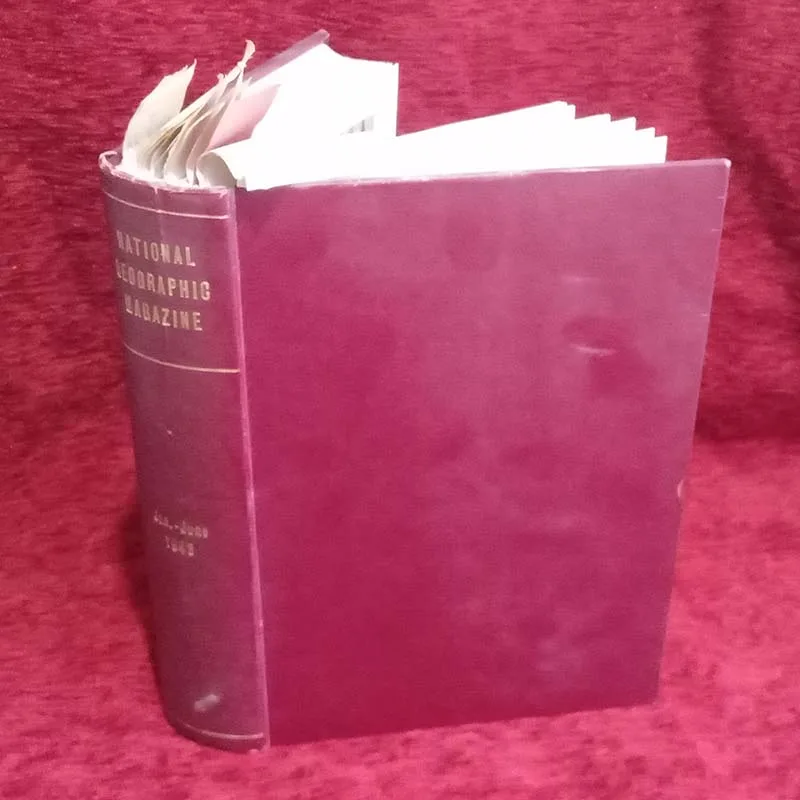
Publisher: National Geographic
Format: Hardback
ISBN: none
National Geographic, January–June 1943
Published by National Geographic Society
Condition: Good (in that stoic, “survived a war and a few basements” kind of way)
Available now from Crappy Old Books, where nostalgia meets mild foxing.
Includes: a whole collection of vintage bookmarks, because apparently someone couldn’t finish a single article without taking a break for 80 years.
This handsome half-year of National Geographic comes to you straight from 1943 — a world halfway between victory and exhaustion, where every photograph was sepia, every headline was earnest, and every article began with “In the remote mountains of…” before taking a sharp turn into colonial confidence.
Inside, you’ll find explorers braving the jungle in flannel shirts, soldiers smiling in grainy close-up, and editors convinced that maps could save the world. The tone is pure wartime optimism — the sort that only a well-illustrated magazine could muster while half the planet was on fire. Expect essays such as:
-
“How to Know Your Allies by Their Hats”
-
“Rubber: The Material That Wins Wars (and Erases Pencils)”
-
“The Pacific — Still There, Still Wet”
-
And the inevitable “People of Somewhere Who Don’t Yet Know They’re Posing for History.”
But wait — this copy comes with extras: a full suite of vintage bookmarks, lovingly left behind by a previous owner who was apparently reading everything at once. Each one a tiny paper time capsule — old tram tickets, ration coupons, grocery lists, maybe a faint whiff of pipe tobacco and moral certainty. You’ll never know what you’ll find wedged between the pages of “Agriculture in the Andes” and “New Frontiers of Aerial Photography.”
Condition: officially Good, unofficially “still better than anything printed last week.” The pages are clean enough to turn, yellow enough to be photogenic, and just brittle enough to remind you that the 1940s were not acid-free.
Perfect for the historically curious, the geographically confused, or anyone who believes that “browsing” used to mean turning a page, not clicking a link.
Keep browsing: See more National Geographic books Other books by National Geographic
